

Staying Ahead of PFAS in Canada
Proactive Strategies for Environmental Professionals
December 3, 2025
By: Harris Switzman
For Canadian environmental professionals, staying ahead of the rapidly evolving landscape surrounding per- and polyfluoroalkyl substances (PFAS) is essential. While PFAS has been on the periphery of environmental practitioners’ views for years, there has been some recent movement across Canada’s regulatory, legal, scientific, and media landscapes that warrants a closer look.
PFAS are now recognized as some of the most widely distributed synthetic compounds globally, appearing in soil, water, air, and even remote ecosystems. For environmental professionals, this expansive reach highlights not only the scale of the issue but also the opportunity to implement strategic and innovative approaches toward assessing and managing these substances. Given that PFAS behave differently from many traditional contaminants, a thorough understanding of their movement through complex environmental systems is essential. Their persistence and mobility pose challenges for delineation and treatment, making proactive management imperative. An additional challenge is that many PFAS compounds are proprietary and require investigative work to determine the potential concentrations and specific species present in products and the environment. As a result, integrating PFAS screening into standard practices for soil, groundwater, surface water, and air quality assessments is becoming routine. This proactive approach helps teams avoid costly rework and develop more robust, defensible strategies for site management.
While sectors like firefighting exhibit heightened awareness of PFAS exposure and associated occupational health risks, various exposure routes and health effects have been documented as early as 1991. The National Fire Protection Association (NFPA) is currently updating its standards for bunker gear to align with U.S. regulations that restrict the use of PFAS due to the health issues and hazardous impacts associated with them. Taken alongside the environmental challenges PFAS present, it’s clear that effective management requires both rigorous assessment practices and a commitment to phasing out PFAS sources in favour of safer, fluorine-free solutions.
Regulatory Advances and Enforcement in Canada
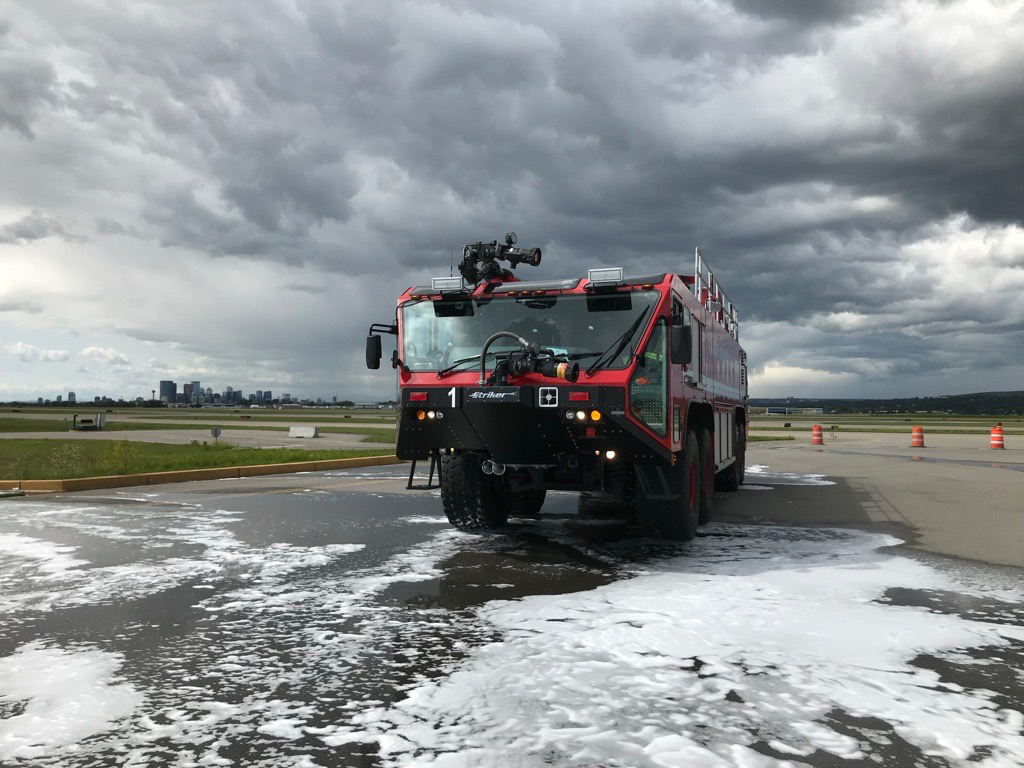
Canada is entering a new phase of PFAS oversight. The recent introduction of a risk management plan by Environment and Climate Change Canada (ECCC) for the entire class of PFAS marks a pivotal moment. While specific PFASs, such as Perfluorooctane Sulfonate (PFOS), salts and precursors, have been regulated through the Canadian Environmental Protection Act (CEPA) since 2006, regulating the entire class of chemicals is an important shift. There are approximately 15,000 tracked by the US EPA, and likely others. Canada’s risk management plan aims to limit PFAS in various products and supply chains, reflecting similar moves in other jurisdictions, such as U.S. states like California and Maine, and the European Union.
Consultation for the plan’s first phase closed on November 25, 2025 and was focused on prohibiting PFAS use in firefighting foams. Importantly it also proposed limits on the residual concentration of PFAS permitted in fire suppression systems and equipment that has undergone decontamination. Earlier this year, companies that use PFAS were also required to report to ECCC on PFAS present in their value chains. The failure to report by several companies resulted in compliance orders and in one case, a $500,000 fine. Additionally, a private member’s bill in Nova Scotia proposes banning PFAS-containing products, further signaling heightened regulatory enforcement and accountability across Canada.
For environmental professionals, these developments mean more than increased compliance obligations. They open opportunities to lead with foresight, strengthen internal programs, and help clients or organizations stay ahead of emerging standards.
Provincial Regulations and Guidelines
Several provinces, including British Columbia, Alberta, Quebec, and Ontario, have environmental quality guidelines specific to PFAS. While none of these have yet focused on PFAS at a chemical class level, the trend toward regulating the entire class of PFAS will be something to watch. Health Canada has also developed drinking water guidelines to guide national consistency.
For those engaged in remediation, water treatment, or water supply work, understanding which PFAS species to test for and how to interpret results across overlapping regulatory frameworks is essential for achieving compliance and maintaining confidence in project outcomes.
Financial and Legal Considerations
Canada’s PFAS landscape is increasingly reflecting trends seen in the U.S. and Europe, particularly in insurance. Many policies, including commercial general liability, product liability, and directors and officers coverage, now exclude PFAS-related claims. These exclusions are driven by regulatory uncertainty, low remediation thresholds, technical complexity, and the potential for high-value litigation. While regulatory frameworks move through the consultation process, the lack of insurance available for PFAS claims is motivating many organisations to proactively develop PFAS management strategies.
Lawsuits against PFAS manufacturers, property owners, and users are emerging, with early cases focused on federal defense and airport sites where aqueous film-forming foam (AFFF) was used, such as in Newfoundland and Labrador, Ontario, Quebec and Nova Scotia. Similar legal attention is likely to expand to other sectors, and the BC government has also initiated action against PFAS manufacturers. These trends highlight the importance of conducting comprehensive environmental assessments early in project planning. Proactive evaluation of PFAS risks helps organizations stay ahead of regulatory, financial, and legal challenges.
Proactive Engagement and Community Awareness
In Canada, public awareness of PFAS issues is increasing, driven by media coverage and advocacy efforts. There are many examples of recent press coverage and public data on PFAS in the environment, including specific regions like the Great Lakes or PEI’s public mapping. The public is becoming increasingly aware of the risks of PFAS. Organizations that engage with PFAS issues and stay informed about local environmental concerns will be well-positioned to adopt proactive and thoughtful responses.
Recommendations for Environmental Professionals
To stay ahead in Canada’s evolving PFAS landscape, environmental professionals can take proactive, strategic steps that turn emerging challenges into opportunities for leadership and innovation:
Integrate PFAS sampling into soil, groundwater, surface water, and air assessments from the outset to avoid costly rework and improve defensibility. To understand the full potential extent of PFAS on a given site, more methods like Total Organic Fluorine and Total Oxidizable Precursor Assays will be needed.
Stay up to date with federal and provincial PFAS policies, especially Canada’s new class-based risk management plan, to ensure projects meet evolving compliance expectations.
Evaluate PFAS liabilities continually and early in capital project planning as insurance exclusions, enforcement actions, and litigation risks continue to grow across Canada. Even pavement can be a source of PFAS that needs to be considered on any civil project.
Work to phase out PFAS-containing materials, such as firefighting foams and PPE, in favour of fluorine-free options that protect workers and the environment.
Interested in learning how Montrose can help you navigate this complex PFAS landscape in Canada? Let’s connect.
Continue Reading


 Harris Switzman
Associate Consultant
Harris is an Associate Consultant at Montrose Environmental based in Calgary, Alberta. His practice area focuses on assessing the interactions between infrastructure and the environment. While his background is in hydrogeology and water resources, Harris has also worked extensively on regulatory and risk management issues related to PFAS and AFFF. Prior to joining Montrose in 2025 Harris was the General Manager of Environment and Sustainability for the Calgary Airport Authority, where he led PFAS and AFFF management, including the transition of its firefighting fleet. He has also sat on the Airports Council International – North America PFAS working group and Canadian Airports Council’s PFAS subcommittee. He is currently working for energy and transportation sector clients on PFAS risk management and collaborates with Montrose’ dedicated AFFF transition team at ECT2.
