

Air Permitting for Data Centers: What Determines Your Timeline
March 18, 2026
By: Roberto Gasparini, PhD, CCM and Shagun Bhat, PhD
Data center development is accelerating across the U.S., driven by cloud growth and artificial intelligence workloads. According to S&P Global, data center investment is poised to grow at more than 10% per year for the rest of the decade.
To secure reliable power amid grid constraints, many developers are turning to on-site generation and battery storage. These design decisions activate air permitting requirements under the Clean Air Act which typically requires a state regulatory review and potentially a federal review.
The result is a permitting landscape that is more jurisdiction-specific, more technical and more schedule-sensitive than many developers anticipate. Engaging a consultant with expertise in air quality permitting can provide strategic advantages that will pay dividends with respect to project cost and schedule.
Key takeaways
- Site location and power system design drive permitting complexity: Ozone nonattainment status and generator configuration can shift a project from minor source permitting to a far more complex federal review process
- Air permitting requirements continue to evolve alongside industry growth: Regulatory updates and the increasing use of on-site power are reshaping permitting expectations for new data center development
- Early permitting strategy protects development timelines: Developers who partner with experienced air quality experts gain clarity on regulatory requirements, reduce permitting risk and keep projects moving forward
Location determines regulatory complexity
Air permitting pathways vary significantly by geography and specific site location. Attainment versus nonattainment status matters.
The U.S. Environmental Protection Agency (EPA) sets the National Ambient Air Quality Standards (NAAQS), which classify areas of ozone into attainment and nonattainment. Attainment means the air quality meets the national standard while nonattainment means it does not. Nonattainment areas face stricter permitting and regulatory requirements. In nonattainment areas, facilities can be classified as a major source at lower emission levels. This explains why the same facility configuration may qualify as a minor source in one county and a major source in another.
In addition, nearby industrial sources influence cumulative air quality impacts and can complicate air dispersion modeling. Facilities located in nonattainment areas must secure emission offsets before an air permit can be issued.
However, obtaining these offsets can be challenging due to the limited availability of approved credits and the competitive demand among regulated sources. Identifying suitable offset providers, negotiating transactions and completing the required regulatory verification can significantly extend project timelines. As a result, the need to procure offsets often becomes a critical constraint that must be addressed well in advance of permit issuance.
Takeaway: Conduct air quality screening during site due diligence, not after securing land.
Power generation technology drives air permit approach
Power system design is typically the primary driver of a data center air permit. Turbines versus engines. Natural gas versus diesel. These decisions directly affect emissions profiles and air permitting pathways.
For developers moving at speed, engines are an attractive option even when turbines are more efficient from an emissions perspective. Alternatively, Tier 4 engines abide by the strictest EPA emissions requirements to greatly reduce particulate matter, nitrogen oxides and other pollutants, which reduces risk but does not guarantee minor source status. In any case, project teams should evaluate the design power rating of the turbine or engine, fuel type and configuration against major source thresholds before procurement to reduce permitting risk.
Operating hour limits can reduce emissions and secure synthetic minor status, provided those limits align with reliability needs. Phased installation strategies can also help manage emissions thresholds over time.
Powering a 150 MW data center with integrated air permitting strategy
For one greenfield 150-megawatt electric power generation facility supporting a large-scale data center, early alignment between engineering and permitting proved critical. The project included 450 natural gas-fired engines equipped with selective catalytic reduction systems. Our team evaluated federal and state requirements, quantified potential emissions, conducted best available control technology (BACT) analyses and performed air dispersion modeling to ensure compliance.
Takeaway: Align engineering decisions and permitting strategy from day one.
Crossing major source thresholds extends air permitting timeline
Once a facility exceeds major source thresholds, permitting becomes more complex and time intensive. Major source status can trigger additional federal review, such as Prevention of Significant Deterioration (PSD) in attainment or unclassified areas or Nonattainment New Source Review. These permits can require BACT or the lowest achievable emissions rate (LAER), air quality and additional impacts analyses, emissions offsets or opportunities for public involvement.
Air dispersion modeling often becomes the linchpin to demonstrating air quality impacts. Mandatory public notice increases visibility, scrutiny and risk. Contested case hearings are common, with permitting timelines extending six to 18 months or longer if enduring lengthy legal battles over the air permit.
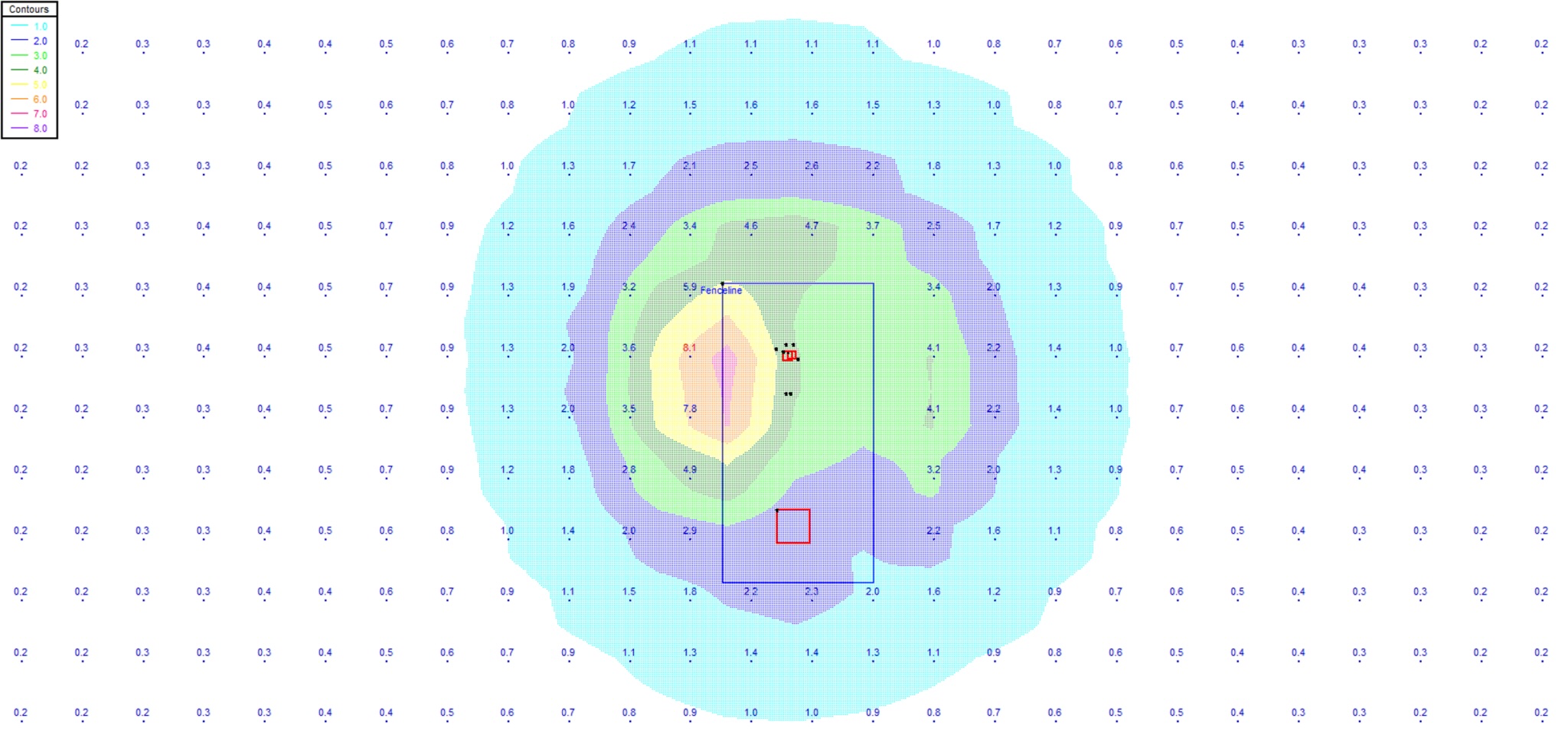
Air dispersion models offer a scientific method to predict pollutant concentrations in the air. These models use inputs like emission rates, weather conditions, and geographical data to simulate pollutant spread, establishing a high-water mark of potential offsite concentrations to ensure emissions remain within federal air quality limits. Learn more: Air Dispersion Models: Meeting Particulate Matter (PM) Regulations
Securing PSD approval for a 500 MW power generation facility
For a 500-megawatt power generation facility anchored by major turbine combustion sources, the PSD preconstruction permit application required a comprehensive air quality impact analysis. Our air quality experts evaluated emissions and applied EPA-approved dispersion modeling to demonstrate compliance with the NAAQS. To meet the 1-hour nitrogen dioxide standard, our team implemented specialized modeling techniques that substantiated compliance with the NAAQS and facilitated permit approval.
The regulatory landscape is constantly evolving amid macro trends
Air permitting does not occur in a static regulatory environment. Federal, state and local regulations continue to shape application requirements and timelines. Shifts in greenhouse gas policy, lowering of the annual PM2.5 NAAQS, and other regulatory changes influence analyses and disclosure.
At the same time, grid constraints are reshaping how data centers secure power. In primary data center markets, average grid interconnection wait times now exceed four years, according to JLL. As developers turn to on-site power and battery storage, these energy decisions directly affect air permitting complexity.
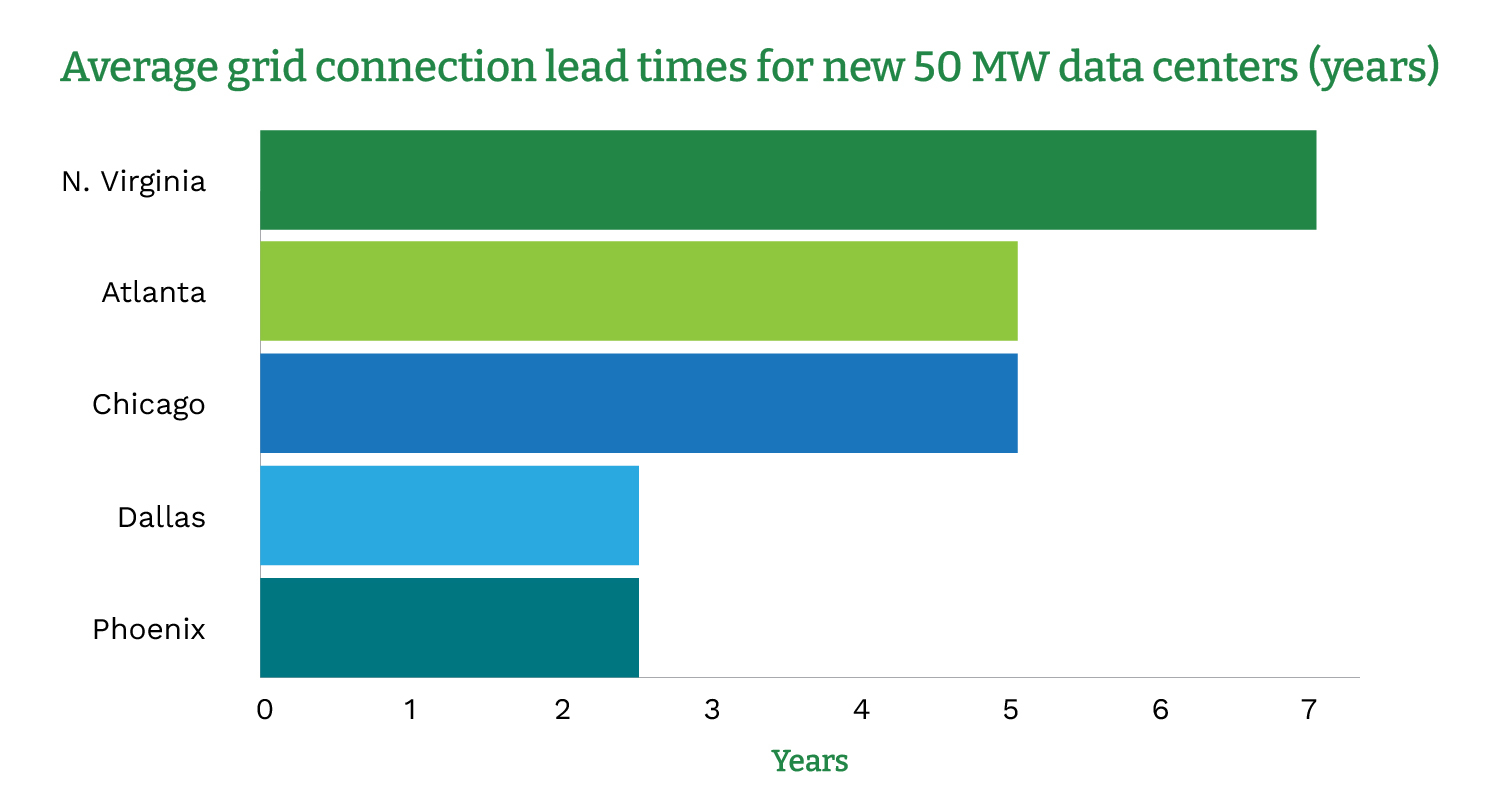
Source: Redesigned chart from JLL Research, 2025 of average grid connection lead times for new 50 MW data centers for areas in the U.S. Read more: 2026 Global Data Center Outlook
Takeaway: Understanding and analysis of key issues can inform permitting strategy and reduce regulatory uncertainty.
Connect air permitting to the broader environmental compliance landscape
In a market where speed defines competitiveness, air permitting can either support or disrupt your schedule. Developers who integrate permitting strategy into site selection, engineering design and financial planning maintain greater control over cost, schedule and regulatory risk.
Air permitting influences capital deployment, procurement timing and construction sequencing. It intersects with zoning, environmental review and long-term operational flexibility.
From site selection and feasibility through permitting, construction, commissioning and operational compliance, Montrose helps clients manage risks at every phase. Our multidisciplinary team partners with owners, developers, engineering and EPC firms, and operators to navigate challenges – everything from environmental planning, regulatory requirements, water and energy strategies, community engagement, health and safety programs, and more. We reduce risk, accelerate project delivery timing, and enable environmentally responsible and sustainable growth for this complex and strategically critical infrastructure market.


 Roberto Gasparini, PhD, CCM
Senior Principal, Spirit Environmental
Roberto has been a dedicated air quality expert since 2000 and an environmental consultant since 2005. As the director of Spirit’s Legal, Audit, & Enforcement Support Program, he specializes in litigation support, due diligence, audits, and regulatory negotiations. Roberto has extensive experience with air quality permitting and is proficient in computerized air dispersion modeling, regulatory applicability assessments, and compliance. He has testified as an expert witness on air quality issues over a dozen times across the US, and he has given presentations at several conferences hosted by trade associations across a number of industries. Roberto has earned distinction by the American Meteorological Society as a Certified Consulting Meteorologist (No. 741). As part of his graduate school research at Texas A&M focusing on particulate matter, which included participating in the Texas Air Quality Study 2000 (TexAQS 2000) and the EPA Supersites Houston project, Roberto authored three papers and co-authored five papers published in peer-reviewed scientific journals.
 Shagun Bhat, PhD
Managing Principal, Spirit Environmental
Dr. Shagun Bhat directs Spirit’s Air Program for Chemical and Refining sectors. Shagun has provided air quality consulting services since 2007 to a variety of industries including refining, chemicals, manufacturing, oil and gas production, processing and transmission, and power generation. A chemical engineer by trade, his areas of expertise include New Source Review (NSR) and Prevention of Significant Deterioration (PSD) permitting, air dispersion modeling, emissions inventory development, use of optical technologies for emission inventory improvement, and litigation support. Shagun has served as a consulting expert on numerous litigation matters for oil and gas, chemicals, and manufacturing sector clients. His experience with public sector clients includes the Texas Commission on Environmental Quality (TCEQ), local governmental agencies such as North Central Texas Council of Governments and, industry groups such as the American Chemistry Council, American Petroleum Institute, and Louisiana Chemical Association.
